Sabi Sand Tree-Climbing Leopards
Djuma, Sabi Sand Nature Reserve, South Africa · Africa · savanna
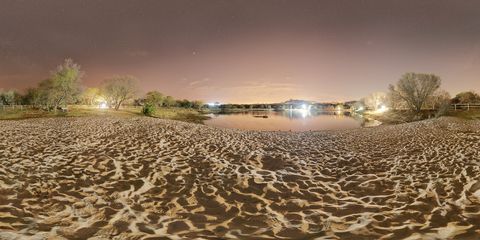
About this place
Examine Panthera pardus arboreal caching against hyena kleptoparasitism, heterospecific alarm networks, and scotopic vision.
For kids: Explore shady marula trees where spotted leopards nap on high branches and noisy alarm birds tattle from above!
Sabi Sand Tree-Climbing Leopards · 360° Habitat Camp
What to look for
- High marula tree branch fork — Sclerocarya birrea anti-kleptoparasite cache. Scan the marula crown forks used by leopards to hoist prey above terrestrial scavengers
- Sun-dappled bushveld grass & scrub — Disruptive rosette camouflage & tapetum. Centre the dappled Lowveld thicket matched by disruptive Panthera pardus rosettes
- Grey go-away-bird treetop perch — Crinifer concolor heterospecific eavesdropping. Locate the exposed snag perch used by grey go-away-birds and vervet sentinels
Source: Balme et al. (2017), Journal of Animal Ecology — Arboreal caching & kleptoparasitism evasion by Panthera pardus in Sabi Sand.
Ask together: Why do so many forest and bushveld animals listen carefully to bird calls even when they aren't birds themselves?
Field quiz
Kids' question: Why do Sabi Sand leopards work so hard to carry their food high up into forked marula trees?
- To keep their meal safe out of reach of ground-walking hyenas and lions
- Because tree squirrels help season it with acorns
- To dry it in the wind like laundry
Answer
To keep their meal safe out of reach of ground-walking hyenas and lions
Adults' question: Which anatomical structure gives nocturnal leopards six-to-seven-fold higher light sensitivity than diurnal primates?
- A reflective riboflavin/zinc tapetum cellulosum behind a rod-dominated retina
- Compound multifaceted corneas split into hexagonal ommatidia
- Bioluminescent tear ducts illuminating prey trails
- Infrared thermoreceptor pits lining the upper whiskers
Answer
A reflective riboflavin/zinc tapetum cellulosum behind a rod-dominated retina
360° photo: Greg Zaal via Poly Haven, CC0
See it live: Live check: Djuma Sabi Sand Bushveld Waterhole Cam
- By day
- Impalas, nyala, kudu, elephants, Egyptian geese & terrapins Unfenced boundaries between Sabi Sand and Kruger National Park allow free genetic flow across more than two million hectares of Lowveld.
- By night
- Solitary leopards drinking, spotted hyenas, hippos, & fiery-necked nightjars Infrared illumination invisible to mammalian cones and rods reveals undisturbed nocturnal drinking behavior by resident Sabi Sand leopards.
Other language: Русский