Port Lincoln Seagrass & Ospreys
Boston Bay, Eyre Peninsula, Spencer Gulf, South Australia · Oceania · wetland_coast
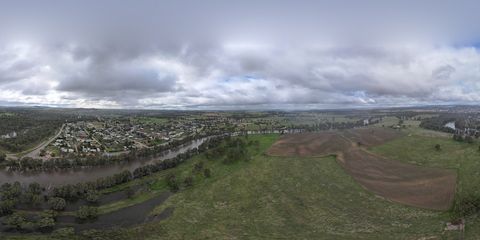
About this place
Examine Pandion cristatus reversible zygodactyl grip, head-first drag reduction, and Spencer Gulf Posidonia blue-carbon meadows.
For kids: Watch sharp-eyed ospreys flip slippery fish nose-first like tiny torpedoes above glowing blue seagrass meadows!
Port Lincoln Seagrass & Ospreys · 360° Habitat Camp
What to look for
- Coastal lookout & stick platform — Pandion cristatus zygodactyl spicules. Centre the elevated coastal platform used by Pandion cristatus pairs
- Emerald ribbon-weed seagrass meadow — Posidonia australis nursery & blue carbon. Locate the subtidal Posidonia seagrass beds sheltering juvenile teleosts
- Spencer Gulf inverse-estuary channel — Seasonal temperature-salinity front. Scan the mouth of Boston Bay opening toward Spencer Gulf's productive shelf
Source: Poole (1989) & Sustaita et al. (2013), Journal of Experimental Biology — Pandion reversible zygodactyly & spicules; Lavery et al. (2013), PLOS ONE — Australian Posidonia blue carbon.
Ask together: Try waving your flat hand sideways through the air and then edge-first like a karate chop—why does an osprey always point its fish nose-first to fly home?
Field quiz
Kids' question: How does an osprey carry a freshly caught fish in its claws as it flies back to its nest?
- Pointed straight nose-first like a torpedo so wind slips smoothly past!
- Sideways like a giant handlebar
- Balanced on top of its head like a hat
Answer
Pointed straight nose-first like a torpedo so wind slips smoothly past!
Adults' question: Why is the eastern osprey (Pandion cristatus) grouped in its own family Pandionidae separate from Accipitridae eagles and hawks?
- Reversible outer fourth toe, spiny plantar spicules, closable nasal valves, and dense oily plumage for full-submersion dives
- Complete absence of talons replaced by webbed duck feet
- Echolocation sonar clicks emitted underwater
- Gills hidden beneath ear coverts for five-minute dives
Answer
Reversible outer fourth toe, spiny plantar spicules, closable nasal valves, and dense oily plumage for full-submersion dives
360° photo: Bidgee, CC BY-SA 3.0 au
See it live: Live check: Port Lincoln Eastern Osprey Nest Cam
- By day
- Resident eastern osprey pair, striped chicks & head-first garfish or mullet deliveries Australia's coastal eastern ospreys (Pandion cristatus) are largely non-migratory year-round residents defending stable breeding territories.
- By night
- Roosting osprey family on stick nest above twinkling Port Lincoln harbour lights Pairs line structural driftwood platforms with dried Posidonia seagrass blades that insulate eggs against crisp Spencer Gulf night breezes.
Other language: Русский