Peak District Badger Woodlands
Peak District Broadleaf Woods, Derbyshire, England · Europe · temperate_forest
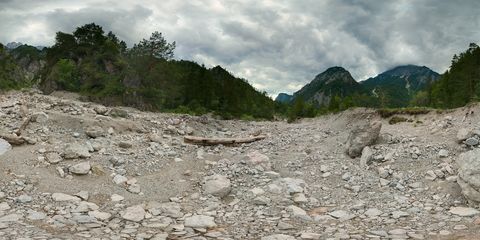
About this place
Investigate multi-century Meles meles subterranean sett engineering and asymmetrical owl ear apertures localizing prey in darkness.
For kids: Explore a shadowy English oak wood where striped badgers pass down underground family castles for hundreds of years!
Peak District Badger Woodlands · 360° Habitat Camp
What to look for
- Ancestral D-shaped sett entrance — Meles meles multi-chambered sett. Locate the spoil heap and D-section entrance of a multi-generational badger sett
- Tawny owl acoustic listening bough — Strix aluco asymmetrical ear triangulation. Centre the sub-canopy perch where tawny owls localize leaf-litter rustles
- Dewy earthworm turf glade — Lumbricus terrestris nocturnal foraging. Scan the moist woodland pasture where badgers forage olfactorily for Lumbricus terrestris
Source: Roper (2010), Badger (Collins New Naturalist) & Norberg (1977), Phil. Trans. R. Soc. B — Multi-century Meles meles sett architecture and Strigidae skull ear asymmetry.
Ask together: Why do you think a badger has bold black-and-white stripes right on its face if it mostly comes out in the dark?
Field quiz
Kids' question: How can a woodland owl pinpoint a tiny mouse rustling under dry leaves on a pitch-black night?
- Feather satellite-dish cheeks and one ear slightly higher than the other
- Tiny glowing headlights hidden under its eyebrows
- Dropping acorns until one bounces off a mouse
Answer
Feather satellite-dish cheeks and one ear slightly higher than the other
Adults' question: What sensory adaptation allows nocturnal woodland owls to resolve both azimuth and elevation of hidden prey?
- Vertically offset ear openings paired with a parabolic facial ruff separating arrival time and intensity
- High-frequency ultrasonic sonar clicks emitted through hollow talons
- Electroreceptive pores along the cere like a shark snout
- Heat-sensing pit membranes lining the lower eyelid
Answer
Vertically offset ear openings paired with a parabolic facial ruff separating arrival time and intensity
360° photo: Daniel Kraft, CC BY-SA 3.0
See it live: Live check: English Woodland Nocturnal Badger & Owl Glade
- By day
- European robins, jays, wood mice, grey & red squirrels, pheasants Diurnal woodland passerines forage over disturbed sett soil rich in invertebrates while badgers rest in thermally buffered chambers below.
- By night
- Striped European badgers, red foxes, tawny owls & wood mice under IR light Infrared illumination reveals social allo-grooming, subcaudal scent-marking ('squatting'), and temporal partitioning between badgers and red foxes.
Other language: Русский