Pantanal Riverbanks & Swimming Jaguars
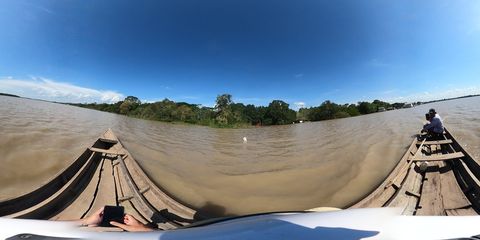
Cuiabá River Gallery, Northern Pantanal, Brazil · Latin America & Reefs · wetland_coast
About this place
Analyze seasonal flood-pulse hydrology, Caiman–Hydrochoerus riverbank concentrations, and skull-piercing Panthera onca bite mechanics.
For kids: Cruise Earth's biggest tropical wetland where periscope-eyed capybaras swim, giant storks nest, and spotted jaguars love water!
Pantanal Riverbanks & Swimming Jaguars · 360° Habitat Camp
What to look for
- Caiman & jaguar river sandbar — Panthera onca cranial-bite ambush bank. Centre the point-bar sandbank where dry-season drawdown concentrates aquatic prey
- Floating hyacinth capybara rafts — Hydrochoerus hydrochaeris periscope cranial line. Locate the floating Pontederia macrophyte mats grazed by social capybara herds
- Towering jabiru stork gallery crown — Jabiru mycteria floodplain platform nest. Scan the emergent gallery tree crown supporting perennial Jabiru mycteria nests
Source: Junk et al. (1989) Flood Pulse Concept & Eriksson et al. (2022), Ecology — Pantanal social/aquatic Panthera onca trophic dynamics.
Ask together: Most house cats hate getting wet—why do you think spotted jaguars in the Pantanal evolved into champion river swimmers?
Field quiz
Kids' question: Why are a capybara's eyes, ears, and nostrils all lined up right along the top of its head?
- So it can look, listen, and breathe like a periscope while hiding underwater!
- To wear giant water-lily hats in the rain
- So hummingbirds can land on its nose
Answer
So it can look, listen, and breathe like a periscope while hiding underwater!
Adults' question: How do northern Pantanal riverine jaguars deviate from classic solitary-territorial felid ecology (Eriksson et al., 2022, Ecology)?
- Superabundant aquatic caiman and fish prey relaxes territoriality, permitting tolerant co-foraging and male coalitions
- Pantanal jaguars hibernate underwater inside mud burrows
- Adults subsist strictly on fallen palm nuts year-round
- Jaguars migrate three thousand kilometres to Andean glaciers
Answer
Superabundant aquatic caiman and fish prey relaxes territoriality, permitting tolerant co-foraging and male coalitions
360° photo: Johnattan Rupire, CC BY-SA 4.0
See it live: Live check: Neotropical Gallery-Forest Cam
- By day
- Clay-colored thrushes, crimson-backed tanagers, motmots & tropical squirrels Compare Cuiabá flood-pulse telemetry in your journal with live Neotropical gallery-forest frugivore activity.
- By night
- Spiny rats, woolly opossums & warm riverside frog choruses Nocturnal acoustic niche partitioning separates hylid frog mating calls from stridulating orthopterans along tropical river corridors.
Other language: Русский