Osaka Sky-Canyon Peregrines
Osaka Bay Sky-Canyons, Kansai, Honshu, Japan · Asia · mountain_alpine
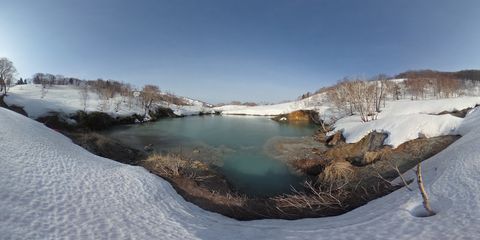
About this place
Analyze Falco peregrinus nasal-tubercle shock-baffle aerodynamics, teardrop stoop physics, and urban cliff-ledge colonization.
For kids: Soar above Osaka Bay with Earth's fastest animal—whose nose cones inspired supersonic jet engines so it can breathe in a dive!
Osaka Sky-Canyon Peregrines · 360° Habitat Camp
What to look for
- Wind-sheltered high-rise gravel ledge — Anthropogenic cliff-ledge scrape. Centre the recessed high-rise ledge functioning as a cliff scrape
- Thermal updraft stoop ceiling — Nasal bony tubercle pressure baffle. Locate the high thermal column launching >320 km/h hunting stoops
- Osaka Bay sea-breeze canyon — Orographic building-deflection lift. Scan the bay-front facade generating vertical deflection updrafts
Source: Ponitz et al. (2014), PLOS ONE & Gowree et al. (2018), Communications Biology — Aerodynamics, vortex lift, and nasal baffle pressure regulation in diving Falco peregrinus.
Ask together: Have you ever stuck your head into strong wind and felt it hard to catch a breath—how does a tiny cone in the middle of a falcon's nostril fix that?
Field quiz
Kids' question: What special feature inside a peregrine falcon's nostrils lets it breathe during a super-fast dive?
- Tiny cone baffles that slow down rushing wind—just like jet engine intakes
- Watertight rubber plugs that shut for an hour
- Miniature spinning propellers on its beak
Answer
Tiny cone baffles that slow down rushing wind—just like jet engine intakes
Adults' question: How do bony nasal tubercles and M-wing cup feathers work together during a Falco peregrinus high-speed stoop?
- Nasal tubercles decelerate intake ram pressure while popped covert feathers prevent boundary-layer separation
- Nostrils seal shut while oxygen is absorbed directly through hollow wing bones
- Sub-dermal air bladders inflate to slow the bird like a parachute
- Echolocation clicks part air molecules ahead of the cere
Answer
Nasal tubercles decelerate intake ram pressure while popped covert feathers prevent boundary-layer separation
360° photo: あおもりくま(Aomorikuma), CC BY-SA 3.0
See it live: Live check: Osaka Skyscraper Balcony Peregrine Cam
- By day
- Urban peregrine falcons scanning Osaka skies, preening & tending balcony nest box Female peregrines ('falcons') outweigh males ('tiercels') by ~35%, partitioning prey sizes between partners and guarding the scrape.
- By night
- Roosting peregrine pair tucked on one leg above glittering Osaka city lights Elevated urban ledges stay free of terrestrial mammalian nest predators such as martens and raccoon dogs.
Other language: Русский