Miami Coral City Resilient Reef
PortMiami & Biscayne Bay, Florida, USA · North America · ocean_reef
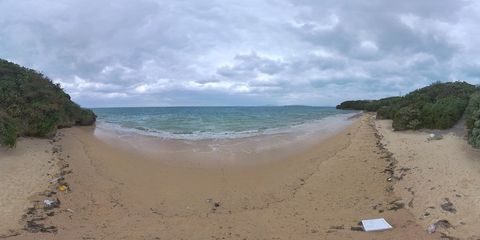
About this place
Investigate thermotolerant urban Symbiodiniaceae coral holobionts and scarid parrotfish bioerosion.
For kids: Dive along sunny seawalls where super-tough brain corals team up with rainbow parrotfish toothbrushes!
Miami Coral City Resilient Reef · 360° Habitat Camp
What to look for
- Heat-hardy brain coral dome — Pseudodiploria & Durusdinium holobiont. Centre the grooved boulder coral hosting heat-tolerant Durusdinium symbionts
- Parrotfish sand-maker reef — Sparisoma & Scarus pharyngeal mill. Locate the grazed carbonate pavement cleared for coral larval settlement
- Gulf Stream tidal flush channel — Florida Current semi-diurnal exchange. Scan the tidal channel flushing urban corals with oxygenated Gulf Stream water
Source: Rohwer et al. (2002), Coral Reefs; Rubin et al. (2021), Communications Biology — Coral holobionts & heat-tolerant urban Miami genotypes.
Ask together: Where do you think soft white tropical beach sand comes from—could a hungry fish actually be making it?
Field quiz
Kids' question: How do colourful parrotfish help baby corals find a clean home on the reef?
- They scrub slippery seaweed off rocks with beak-like teeth like a toothbrush!
- They build wooden houses out of driftwood
- They sing lullabies to sea turtles
Answer
They scrub slippery seaweed off rocks with beak-like teeth like a toothbrush!
Adults' question: What defines the 'coral holobiont' concept formulated by Rohwer et al. (2002)?
- A functional ecological unit integrating the cnidarian polyp, endosymbiotic dinoflagellates, bacteria, and archaea
- A solitary limestone crystal containing zero microorganisms
- A school of pelagic sharks swimming above a sandbar
- Deep-sea hydrothermal vents lacking photosynthesis
Answer
A functional ecological unit integrating the cnidarian polyp, endosymbiotic dinoflagellates, bacteria, and archaea
360° photo: AsPJT, CC0
See it live: Live check: Coral City Camera (Underwater Urban Reef)
- By day
- Rainbow & midnight parrotfish, French angelfish, sergeant majors, & manatees Coral Morphologic's live underwater observatory has documented over 220 fish species and 25 stony coral species thriving along an urban seawall.
- By night
- Coral polyps extending feeding tentacles, octopuses, & spiny lobsters At night, stony corals switch from autotrophic algal sugars to heterotrophic zooplankton capture, while Caribbean reef octopuses emerge.
Other language: Русский