Melbourne Sky-Ledge Falcons
Collins Street Canyon & Yarra Corridor, Melbourne, Victoria, Australia · Oceania · mountain_alpine
About this place
Examine Falco macropus translucent nictitating-membrane tear spreading, malar solar-glare attenuation (Vrettos et al., 2021), and bifoveate acuity.
For kids: Blink sideways with Melbourne's sky-high falcons—wearing built-in clear swimming goggles and athlete eye-black stripes!
Melbourne Sky-Ledge Falcons · 360° Habitat Camp
What to look for
- 367 Collins granite eyrie ledge — Falco peregrinus macropus long-term site fidelity. Centre the 34th-floor recessed ledge occupied continuously by peregrines since 1991
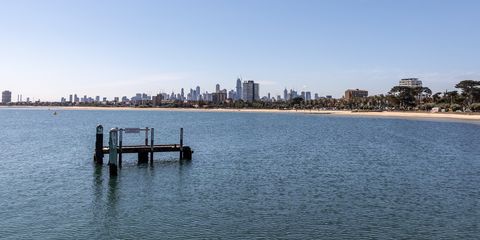
- Sunlit Yarra River & Port Phillip reflection — Malar melanin glare absorption & nictitating sweep. Locate the reflective water corridor where malar stripes preserve retinal contrast
- Bifoveate spiral-stoop skyway — Logarithmic spiral & 140 Hz flicker fusion. Scan the upper airspace where falcons fly logarithmic spirals preserving straight-head aerodynamics
Source: Vrettos et al. (2021), Biology Letters — Peregrine malar stripes evolve with solar radiation to reduce glare; Tucker (2000), Journal of Experimental Biology — Deep-fovea spiral stoop geometry.
Ask together: Why do baseball and football players paint dark stripes right underneath their eyes on sunny days—just like a peregrine falcon's dark cheek feathers?
Field quiz
Kids' question: How do the clear 'third eyelid' and dark cheek stripes help Melbourne's peregrine falcons fly through bright, windy skies?
- The clear lid wipes & shields eyes like ski goggles while dark stripes soak up sun glare!
- They change color to match passing trams
- They glow green to signal ships in the bay
Answer
The clear lid wipes & shields eyes like ski goggles while dark stripes soak up sun glare!
Adults' question: Why do diving peregrine falcons often approach distant prey along a curved logarithmic spiral rather than a straight line (Tucker, 2000)?
- To keep prey locked on the sharpest angled deep fovea (~40° off-axis) while holding the head straight for minimum aerodynamic drag
- Because Coriolis forces spin birds counter-clockwise in Victoria
- Because peregrines have only one functional eye at a time
- To wind up wing tendons like a rubber-band airplane
Answer
To keep prey locked on the sharpest angled deep fovea (~40° off-axis) while holding the head straight for minimum aerodynamic drag
360° photo: Dietmar Rabich, CC BY-SA 4.0
See it live: Live check: Melbourne 367 Collins Peregrine Falcon Cam
- By day
- Australian peregrine pair (Falco peregrinus macropus), white-down eyasses & fledgling wing exercises Austral spring breeding peaks from September to November at 367 Collins; observe rapid wing-flapping ('helicoptering') as fledglings build pectoralis power.
- By night
- Sleeping falcon family sheltered inside granite gutter high above Melbourne lights Urban heat-island warmth and recessed granite architecture buffer nocturnal Bass Strait cold fronts during early spring brooding.
Other language: Русский