Lake Baikal Crystal Ice & Nerpa Seals
Olkhon Gate & Central Basin, Lake Baikal, Siberia, Russia · Asia · polar
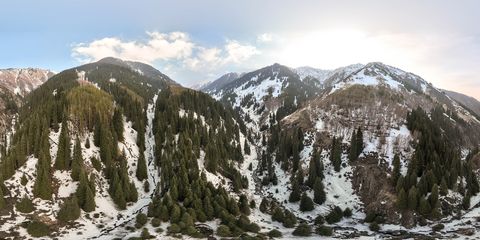
About this place
Explore the Baikal continental rift abyss (20% of global liquid surface freshwater), Epischura baikalensis biofiltration, and endemic Pusa sibirica.
For kids: Peer through glass-clear Siberian ice into Earth's deepest lake—kept sparkling clean by tiny shrimp helpers and home to round freshwater seals!
Lake Baikal Crystal Ice & Nerpa Seals · 360° Habitat Camp
What to look for
- Glass-clear methane-bubble & turquoise ice — Epischura baikalensis ultra-oligotrophy. Centre the ultra-transparent fast ice formed from low-turbidity rift water
- Turquoise pressure-ridge snow lair — Pusa sibirica produshina & birth lair. Locate the hummocked pressure ridge sheltering subnivean nerpa pupping lairs
- Ice-festooned Olkhon rift cliffs — 1,642 m continental rift graben. Scan the fault-scarp headland bounding Earth's deepest, oldest lake basin
Source: Palo & Väinölä (2006), Journal of Evolutionary Biology — Pleistocene Arctic origins of Pusa sibirica; Moore et al. (2009), BioScience — Lake Baikal endemic food web.
Ask together: Lake Baikal sits thousands of miles inland from any salty ocean—how do you think seal ancestors ever traveled all the way to the middle of Siberia during the Ice Age?
Field quiz
Kids' question: Who keeps giant Lake Baikal's water so famously clear that winter ice looks like a clean glass window?
- Billions of tiny rice-grain-sized crustaceans called epischura filtering tiny algae
- Scuba divers polishing the bottom with sponges
- Underwater volcanoes boiling all the mud away
Answer
Billions of tiny rice-grain-sized crustaceans called epischura filtering tiny algae
Adults' question: How did ancestors of the endemic Baikal seal (Pusa sibirica) reach landlocked central Siberia?
- Pleistocene proglacial ice-dammed lakes linked Arctic rivers to Baikal, where pressure-lowered freezing points drive deep oxygen convection
- Underground marine tunnels connecting Baikal directly to the Sea of Japan
- Human transport aboard medieval trade caravans
- Convergent evolution from Siberian river otters
Answer
Pleistocene proglacial ice-dammed lakes linked Arctic rivers to Baikal, where pressure-lowered freezing points drive deep oxygen convection
360° photo: Nikolai Bulykin, CC BY-SA 4.0
See it live: Live check: Russian Boreal Wildlife & Winter Den Cam
- By day
- Eurasian brown bear Mansur foraging, swimming in his pool, or resting in winter snow Compare continental Russian photoperiod and winter temperatures between western boreal woods and eastern Siberia's Irkutsk timezone.
- By night
- Quiet Russian forest night watch & cozy straw-lined winter den telemetry Hibernating Ursus arctos drops heart rate to ~8–10 bpm while keeping core temperature near 33 °C to preserve rapid arousal capability.
Other language: Русский