Karula Old-Growth Black Storks
Karula National Park, Võrumaa, Estonia · Europe · temperate_forest
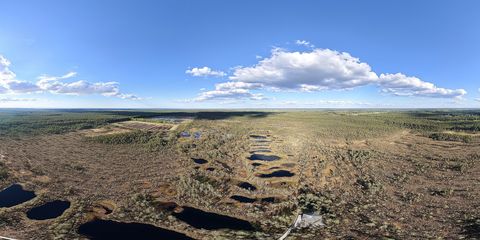
About this place
Explore shy forest-interior Ciconia nigra nesting ecology and ectomycorrhizal carbon-sharing networks beneath Baltic pines.
For kids: Tiptoe into quiet Estonian pine woods where shy glossy-feathered black storks nest above secret fungal tree networks!
Karula Old-Growth Black Storks · 360° Habitat Camp
What to look for
- Ancient lateral nest pine — Ciconia nigra sub-canopy platform. Locate the mature lower-canopy bough architecture required for massive black stork stick nests
- Mossy mycorrhizal forest floor — Ectomycorrhizal hyphal network. Centre the undisturbed humus floor housing ectomycorrhizal root symbioses
- Shaded woodland brook — Brook lamprey & loach foraging stream. Scan the clean canopy-shaded stream corridor where adult storks stalk brook fish and amphibians
Source: Simard et al. (1997), Nature & Lõhmus et al. (2005), Biological Conservation — Bidirectional mycorrhizal carbon transfer and old-growth habitat selection by Ciconia nigra.
Ask together: Why do white storks build nests right on village chimneys while their cousin the black stork hides deep inside quiet forests?
Field quiz
Kids' question: How do tall pine and birch trees help tiny shaded seedlings underneath the Karula forest floor?
- They share food underground through a web of friendly mushroom threads
- They drop warm woollen mittens in winter
- They bend down to fan seedlings with pinecones
Answer
They share food underground through a web of friendly mushroom threads
Adults' question: What did Simard et al. (1997) demonstrate using carbon-isotope labeling in mixed forest tree roots?
- Net bidirectional carbon transfer between tree species via shared ectomycorrhizal hyphae, favouring shaded receivers
- Complete parasitic root strangulation of conifers by birches
- Airborne methane exchange exclusively through pine needles
- Zero nutrient movement unless roots physically graft bark-to-bark
Answer
Net bidirectional carbon transfer between tree species via shared ectomycorrhizal hyphae, favouring shaded receivers
360° photo: JMdronfly, CC BY-SA 4.0
See it live: Live check: Estonian Kotkaklubi Black Stork Nest Cam
- By day
- Iridescent black storks tending mossy nest, wood warblers & pine martens Estonia's Eagle Club (Kotkaklubi) monitors Karula nests via solar micro-transmitters tracking autumn flyways to East Africa.
- By night
- Incubating or roosting black storks, tawny owls & Ural owls calling Near fifty-eight degrees north, June astronomical twilight persists all night while forest acoustics shift to nocturnal Strigidae.
Other language: Русский