Homosassa Warm-Spring Manatees
Homosassa & Crystal River Springs, Florida, USA · North America · ocean_reef
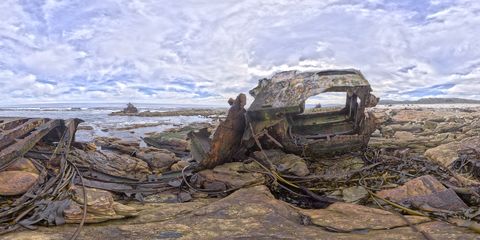
About this place
Study Trichechus manatus low metabolic thermoregulation, karst spring refugia, and pachyosteosclerotic ribs.
For kids: Swim into crystal-clear warm springs where gentle sea cows wear built-in weight belts of solid bone!
Homosassa Warm-Spring Manatees · 360° Habitat Camp
What to look for
- Warm limestone aquifer vent — Floridan Aquifer 22 °C thermal refuge. Centre the karst limestone vent discharging constant 22 °C groundwater
- Submerged eelgrass meadow — Pachyosteosclerotic benthic trim. Locate the submerged macrophyte bed grazed via solid-rib neutral buoyancy
- Cleaning-fish & cypress halo — Euryhaline fish & epibiont symbiosis. Scan the sunlit midwater column shared by mangrove snappers, mullet, and needlefish
Source: Irvine (1983), Biological Conservation; Domning & de Buffrénil (1991), Marine Mammal Science — Manatee thermal limits & bone ballast.
Ask together: What happens when you hold a big breath of air in a swimming pool—and how do heavy ribs solve that for a manatee?
Field quiz
Kids' question: What happens when a manatee wears down its teeth from chewing sandy sea grass?
- Brand-new teeth march forward from the back of its jaw for life!
- It borrows false teeth from pelicans
- It switches to eating jellyfish
Answer
Brand-new teeth march forward from the back of its jaw for life!
Adults' question: Which anatomical adaptation allows Trichechus manatus to hover horizontally over seagrass beds without expending energy?
- Solid pachyosteosclerotic ribs lacking marrow cavities paired with elongated dorsal lungs
- Swallowing twenty kilograms of granite cobbles weekly
- Continuous downward thrust from dorsal fin undulations
- Thick subdermal blubber denser than limestone
Answer
Solid pachyosteosclerotic ribs lacking marrow cavities paired with elongated dorsal lungs
360° photo: Greg Zaal (Panorama) Rico Cilliers (Backplates), CC0
See it live: Live check: Homosassa Underwater Manatee Cam
- By day
- West Indian manatees resting on sand, sheepshead, mangrove snappers, & gar Prehensile vibrissae-studded upper lip pads manipulate vegetation independently—reflecting shared Paenungulata ancestry with elephants.
- By night
- Sleeping manatees rising softly every twenty minutes for a quiet breath Resting manatees drop heart rates dramatically, surfacing on autopilot every fifteen to twenty minutes while remaining behaviourally asleep.
Other language: Русский