Galápagos Giant Tortoise Mist Meadow
Santa Cruz Highlands, Galápagos, Ecuador · Latin America & Reefs · savanna
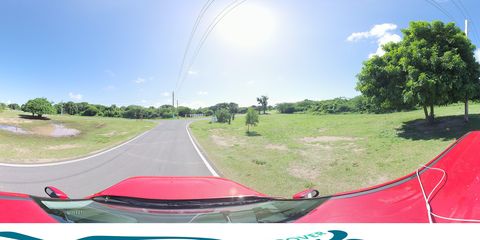
About this place
Compare Chelonoidis domed versus saddleback carapace radiation, garúa mist hydrology, and Geospiza cleaning mutualism.
For kids: Meet gentle giant tortoises whose shells match their island snacks and who stand on tiptoes for finch bird-doctors!
Galápagos Giant Tortoise Mist Meadow · 360° Habitat Camp
What to look for
- Garúa mist mud wallow — Chelonoidis porteri thermal pool. Centre the garúa-fed highland wallow used for nocturnal heat retention
- Finch tick-cleaning turf — Geospiza fuliginosa cleaning station. Locate the grazed meadow turf where ground finches solicit cleaning postures
- Giant daisy-tree mist canopy — Scalesia pedunculata fog interception. Scan the endemic Scalesia canopy harvesting horizontal ocean fog
Source: Chiari et al. (2017), Scientific Reports & MacFarland & Reeder (1974), Science — Saddleback vs domed Chelonoidis mechanics and finch mutualism.
Ask together: If you lived on an island with tall tree-cacti instead of low green grass, why would a curved front 'window' in your shell help at lunchtime?
Field quiz
Kids' question: Why does a Galápagos giant tortoise stand high on stiff legs and stretch its neck out when a little finch hops nearby?
- So the friendly bird can pick off itchy ticks hiding in its skin folds
- To race the bird across the meadow
- To hide its shell inside low clouds
Answer
So the friendly bird can pick off itchy ticks hiding in its skin folds
Adults' question: What surprising biomechanical advantage did 3D shell reconstructions reveal for saddleback Chelonoidis tortoises alongside high cactus browsing (Chiari et al., 2017)?
- Lower energetic cost and faster self-righting after overturning on jagged lava terrain
- Hydrodynamic planing for trans-oceanic diving
- Acoustic amplification of infrasonic mating calls
- Complete reflection of ultraviolet equatorial radiation
Answer
Lower energetic cost and faster self-righting after overturning on jagged lava terrain
360° photo: federicodebetto, CC BY-SA 4.0
See it live: Live check: Ecuador Mainland Bird Station
- By day
- Booted racket-tails, violet-tailed sylphs & tanagers on mainland Ecuador Notice the one-hour offset between Pacific/Galapagos telemetry and mainland Ecuador's Chocó slope where ancestral island lineages originated.
- By night
- Nocturnal cloud-forest moths, rain frogs & warm equatorial mist Equatorial latitudes experience near-constant twelve-hour photoperiods year-round across both mainland Andes and Galápagos.
Other language: Русский