Carpathian Beech-Forest Brown Bears
Zărnești & Piatra Craiului Foothills, Carpathians, Romania · Europe · mountain_alpine
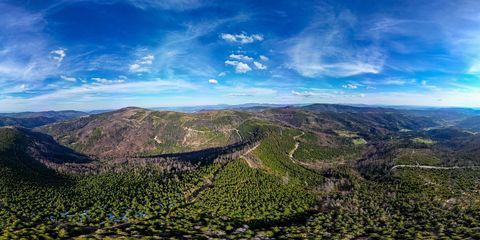
About this place
Investigate Carpathian Ursus arctos autumn beech-mast hyperphagia and urea-recycling bone-sparing winter hibernation.
For kids: Roam misty Transylvanian mountain woods where brown bears munch crunchy beechnuts and snooze all winter without losing strength!
Carpathian Beech-Forest Brown Bears · 360° Habitat Camp
What to look for
- Ancient beech & oak mast slope — Fagus sylvatica autumn hyperphagia. Locate the mature Fagus-Quercus mast stand fueling pre-denning hyperphagia
- Root-vaulted hillside winter den — Bone-sparing winter hibernation chamber. Centre the north-facing wooded slope suited for thermally stable winter dens
- Resin-scented pine rub tree — Pedal & dorsal olfactory communication. Scan the ridge wildlife trail featuring traditional scent-rubbing conifers
Source: Tøien et al. (2011), Science & Donahue et al. (2006), J. Experimental Biology — Hibernating Ursus metabolic suppression independent of body temperature and osteoblastic bone preservation.
Ask together: If an astronaut floats in space or a person stays in bed for months, their bones get weaker—why do doctors study sleeping winter bears?
Field quiz
Kids' question: What amazing superpower keeps a winter-sleeping brown bear strong until spring?
- Its body recycles nutrients to protect bones and muscles while sleeping on stored autumn fat
- Squirrels bring hot soup to the den every morning
- It wakes up every night to lift heavy boulders
Answer
Its body recycles nutrients to protect bones and muscles while sleeping on stored autumn fat
Adults' question: How does Ursus arctos hibernation physiology differ fundamentally from small-mammal deep torpor (e.g., ground squirrels)?
- Metabolic rate drops ~75% while core temperature stays high (32–34 °C), recycling 100% of urea nitrogen and preserving bone mineral density
- Core body temperature freezes solid at minus five degrees Celsius
- Heart rate accelerates to three hundred beats per minute all winter
- Bears must wake weekly to drink river water and excrete ammonia
Answer
Metabolic rate drops ~75% while core temperature stays high (32–34 °C), recycling 100% of urea nitrogen and preserving bone mineral density
360° photo: Andrzej Kępys, CC BY-SA 4.0
See it live: Live check: Carpathian Oak-Beech Forest Brown Bear Sanctuary
- By day
- Carpathian brown bears bathing in forest pools, climbing oaks, ravens & jays Set across sixty-nine hectares of natural Carpathian oak-hornbeam forest near Piatra Craiului, rescued bears re-express natural foraging and den-digging ethograms.
- By night
- Bears resting in leafy forest beds, tawny owls & Carpathian night chorus Crepuscular and nocturnal cooling triggers active foraging and scent-investigation across the forested enclosure valleys.
Other language: Русский