Borneo River-Canopy Orangutans
Lower Kinabatangan Floodplain, Sabah, Malaysian Borneo · Asia · rainforest
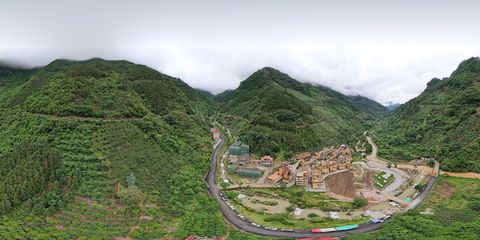
About this place
Study Pongo pygmaeus mast-fruiting spatial memory, herbal self-medication, cultural tool use, and eight-year maternal apprenticeship.
For kids: Swing high with clever red-haired orangutans that weave fresh leafy beds every evening and fashion rain umbrellas from giant leaves!
Borneo River-Canopy Orangutans · 360° Habitat Camp
What to look for
- Woven treetop night-nest fork — Composite structural arboreal platform. Centre the upper-canopy fork suited for green-wood fracture-weave nests
- Fruiting riverine strangler fig — Ficus keystone fallback resource. Locate the riverine Ficus crown buffering inter-mast fruit scarcity
- Medicinal lianas & floodplain bank — Zoopharmacognosy & arboreal sway. Scan the liana-draped riverbank used for tree-sway crossing and herbal salves
Source: van Schaik et al. (2003), Science — Orangutan cultural repertoires; Laumer et al. (2024), Scientific Reports — Active wound treatment with medicinal liana.
Ask together: If you had to weave your own bed high in a tree every single night before dark, how would you test if the branches were strong AND bouncy?
Field quiz
Kids' question: Why does a young orangutan stay close to its mother for about eight whole years—longer than any other land animal besides humans?
- To memorize hundreds of jungle foods, safe climbing paths, and leaf-tool tricks
- Because young orangutans don't grow arms until age eight
- To wait for snow to melt on Borneo
Answer
To memorize hundreds of jungle foods, safe climbing paths, and leaf-tool tricks
Adults' question: How do Bornean orangutans physiologically endure multi-year intervals of fruit scarcity between dipterocarp mast events?
- Ultra-low primate daily energy throughput, lipid storage during masts, and bark/cambium fallback
- Six-month dry-season estivation buried in river mud
- Switching to active pack-hunting of pygmy elephants
- Symbiotic nitrogen-fixing gills along the throat pouch
Answer
Ultra-low primate daily energy throughput, lipid storage during masts, and bark/cambium fallback
360° photo: Liuxingy, CC BY-SA 4.0
See it live: Live check: Sundaic & Wallacean Rainforest Canopy Watch
- By day
- Emergent rainforest raptors, tropical hornbill calls & monsoon mist across giant trees Compare synchronous equatorial photoperiods (~12 h daylight year-round) across Borneo and Mindanao dipterocarp canopies.
- By night
- Warm equatorial downpours, katydids & nocturnal rainforest acoustic layers Insects and anurans partition narrow frequency bands in equatorial nights, minimizing acoustic masking across dense foliage.
Other language: Русский