Block Island Whisker-Radar Seals
Sandy Point, Block Island, Rhode Island, USA · North America · wetland_coast
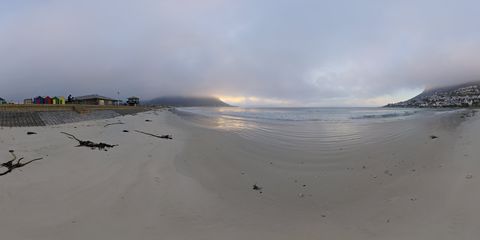
About this place
Examine Halichoerus grypus undulating vibrissae Kármán-vortex suppression and hydrodynamic wake tracking.
For kids: Visit a windy Atlantic sandbar where seals curl into 'banana poses' and track fish wakes with wavy whiskers!
Block Island Whisker-Radar Seals · 360° Habitat Camp
What to look for
- Sandy Point haul-out sandbar — Halichoerus grypus & Phoca vitulina haul-out. Centre the undisturbed terminal sand spit used for thermal haul-out
- Two-current hydrodynamic rip — Undulating vibrissae Kármán-vortex trail. Locate the turbulent tidal convergence where seals track sand-lance wakes
- Dune grass & North Light bluff — Ammophila breviligulata barrier dunes. Scan the marram-grass barrier dunes stabilizing Block Island's northern tip
Source: Dehnhardt et al. (2001), Science; Hanke et al. (2010), Journal of Experimental Biology — Pinniped vibrissal wake tracking & vortex suppression.
Ask together: When you swirl your hand in bathwater, tiny whirlpools keep spinning for seconds—how does a seal use that invisible trail to find dinner?
Field quiz
Kids' question: Why do harbor and gray seals have bumpy, wavy whiskers instead of smooth round ones like a housecat?
- Wavy bumps keep whiskers steady in currents so they can feel a swimming fish's trail!
- To curl fancy hairstyles on the beach
- To catch falling snowflakes
Answer
Wavy bumps keep whiskers steady in currents so they can feel a swimming fish's trail!
Adults' question: What biomimetic engineering principle was discovered in the undulating geometry of phocid seal vibrissae (Hanke et al., 2010)?
- Suppression of self-induced Kármán vortex-induced vibrations, enabling detection of prey wakes up to 35 seconds later
- Generation of ultrasonic sonar clicks from whisker tips
- Bioluminescent attraction of Atlantic squid
- Filtering microscopic phytoplankton like baleen plates
Answer
Suppression of self-induced Kármán vortex-induced vibrations, enabling detection of prey wakes up to 35 seconds later
360° photo: Greg Zaal (Panorama) Rico Cilliers (Backplates), CC0
See it live: Live check: Block Island Atlantic Seal & Surf Cam
- By day
- Gray & harbor seals hauling out on sandbars, herring gulls, & northern gannets Haul-out counts peak near low tide during cooler months when migratory gray and harbor seals congregate along the turbulent rip.
- By night
- Crashing Atlantic surf at the tidal rip & nocturnal seal foraging offshore With 1,500 nerve fibres innervating each follicle—ten times more than terrestrial mammals—seals forage effortlessly through moonless nights.
Other language: Русский