Amazon Flooded Forest & Pink Dolphins
Rio Negro & Várzea Confluence, Manaus, Brazil · Latin America & Reefs · rainforest
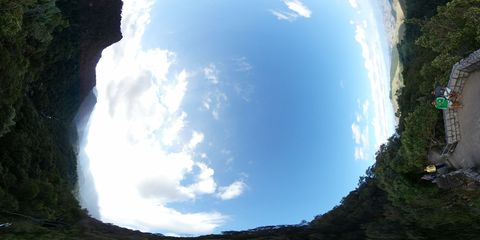
About this place
Investigate Inia geoffrensis unfused cervical kinematics, clutter-resistant melon biosonar, and tambaqui seed-dispersal ichthyochory.
For kids: Paddle into a magical flooded rainforest where pink river dolphins turn their heads sideways to weave right between tree trunks!
Amazon Flooded Forest & Pink Dolphins · 360° Habitat Camp
What to look for
- Submerged tree-trunk slalom maze — Inia geoffrensis unfused cervical spine. Centre the submerged root-and-trunk labyrinth navigated by Inia geoffrensis
- Mirror-dark blackwater sonar channel — Collimated melon biosonar beam. Locate the tannin-stained channel where narrow-beam clicks prevent echo clutter
- Fish-dispersed fruiting canopy — Colossoma macropomum ichthyochory. Scan the floodplain tree crowns evolved for seed dispersal by frugivorous tambaqui
Source: Ladegaard et al. (2015), J. Exp. Biol. & Correa et al. (2015), Ecology — Inia geoffrensis clutter-free biosonar and Amazonian fish seed dispersal.
Ask together: Imagine swimming around your neighborhood park if summer rain rose up to the treetops—why would turning your head sideways help in a tree maze?
Field quiz
Kids' question: What special neck adaptation lets an Amazon pink river dolphin weave easily between flooded rainforest trees?
- Unfused neck bones that let it turn its head sideways left and right!
- A stretchy giraffe neck hidden inside its tail
- Tiny wheels under its chin
Answer
Unfused neck bones that let it turn its head sideways left and right!
Adults' question: Why do Amazonian floodplain trees time fruit ripening to peak high-water months rather than the dry season (Correa et al., 2015)?
- To enlist large frugivorous fishes like tambaqui for long-distance upstream seed dispersal across flooded forests
- Because insects and birds vanish completely during summer rains
- To freeze seeds inside cold Andean snowmelt ice
- To poison herbivorous river turtles with dry bark
Answer
To enlist large frugivorous fishes like tambaqui for long-distance upstream seed dispersal across flooded forests
360° photo: Francisco Ayres, CC BY-SA 4.0
See it live: Live check: Neotropical Toucan & Canopy Sanctuary
- By day
- Chestnut-mandibled & keel-billed toucans tossing fruit with precision bills Observe ballistic lingual-bill fruit transport on the live Neotropical cam alongside your Manaus floodplain telemetry.
- By night
- Resting rainforest toucans tucking bills over their backs like feathered pillows Sleeping Ramphastos toucans rotate the head 180° to rest the vascular bill beneath dorsal feathers and folded rectrices, minimizing heat loss.
Other language: Русский